About Tiruchirappalli District (Tamil Nadu)
Tiruchirappalli district is a district of the Tamil Nadu state with its administrative headquarters located at Tiruchirappalli city. The district got its name from its headquarters city, Tiruchirappalli. The name of the place, Tiruchirappalli is derived from the two terms one is “Tiru” and another is “Chirapalli”. According to the Hindu Mythology, the meaning of the word” Tiru” is to address someone with respect whereas "Chirapalli" is a split of Shree Ram-head and palli is to sleep. Mainly it refers to Sriranganathar God who generally takes rest with his head at a little elevated position at Srirangam in the Tiruchirappalli district. As per some archaeological evidences and ancient literatures of 300 B.C. onwards Woraiyur, a part of the today’s Tiruchirappalli was the capital city of Chola dynasty. Some other sources mentioned that during the days of Kalabhra interregnum also Woraiyur was a part of the Chola Kingdom. After sometime the place was invaded by Mahendra Varma Pallava I who ruled over South India in A.D. 590 and constructed the rock-cut cave-temples within the Rockfort. Pallava dynasty ruled the place till 880 A.D. Following the downfall of the Pallavas in the 8th century, the place was conquered by the Medieval Cholas, who ruled it until the 13th century. Later, the place was ruled by other different dynasties likewise Pandyas, Mughal and Nayak. Tirucirappalli as a separate district came into existence in the year 1801.
Sir Chandrasekhara Venkata Raman, an illustrious Indian physicist who worked in the field of light scattering was born on 7th November, 1888 at Tiruchirappalli in the former Madras Presidency. He was honoured with numerous prestigious awards such as Nobel Prize in Physics in 1930, Bharat Ratna in 1954 and many more.
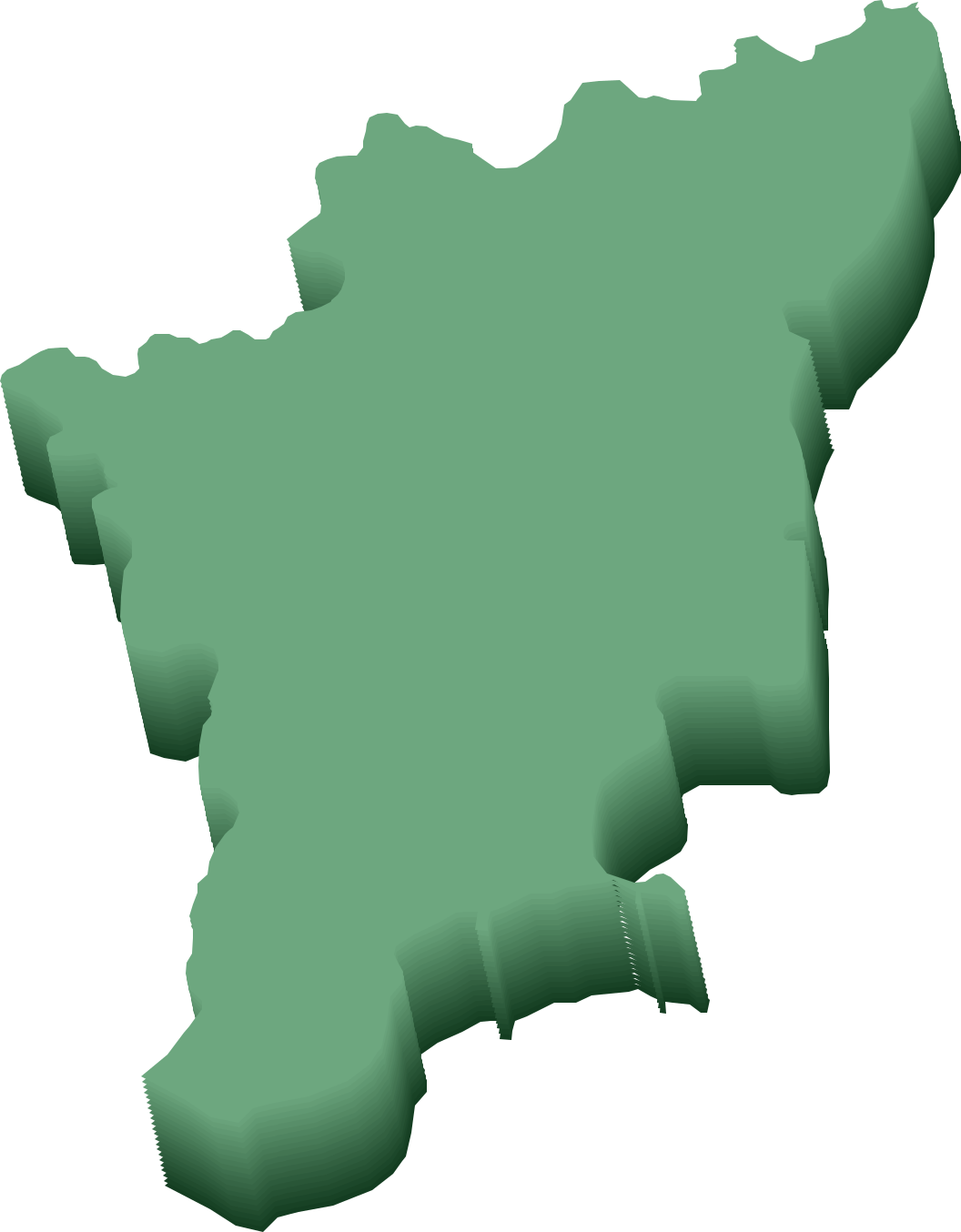
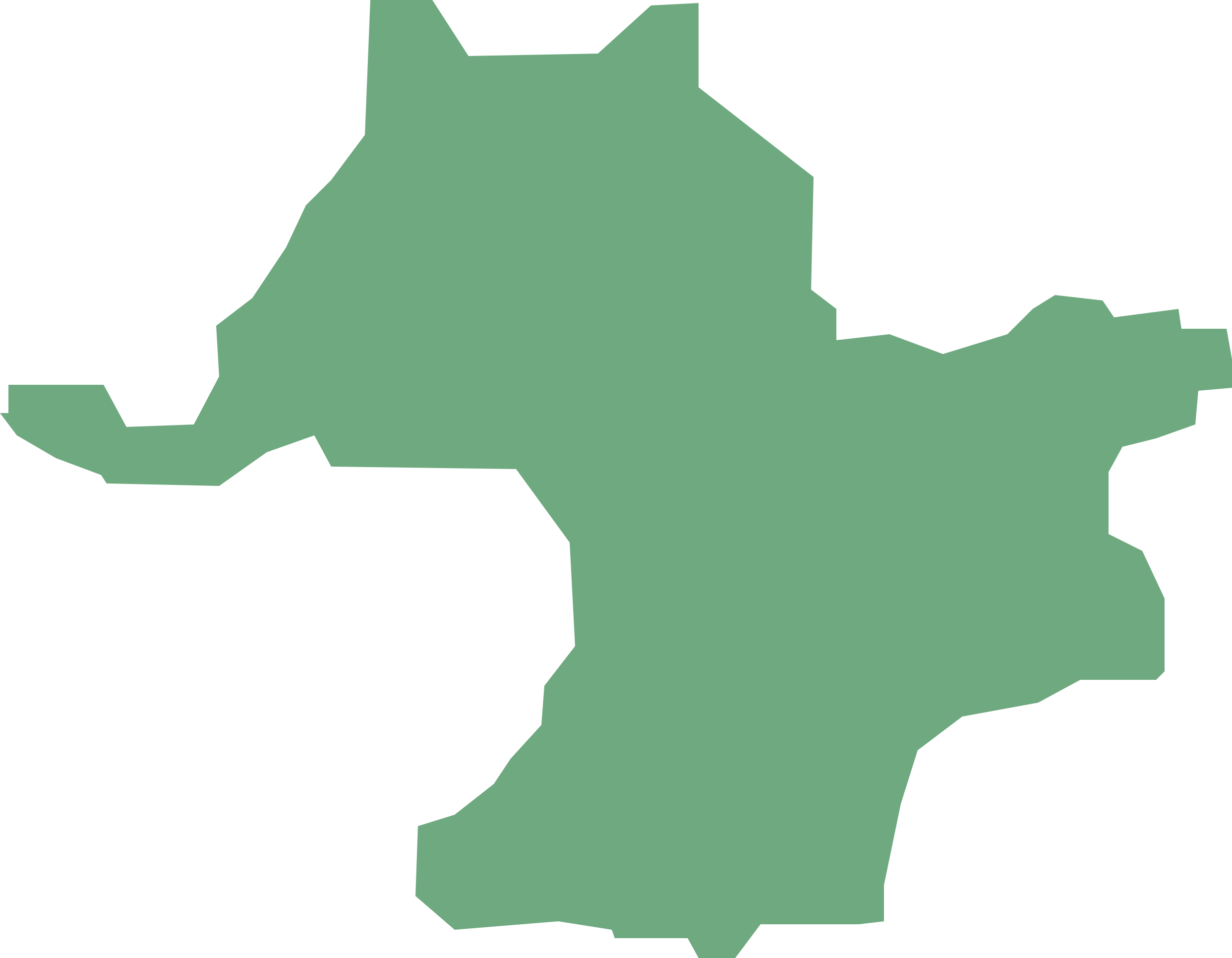
Geographically, the district lies at 10°79'N latitude, 78°70'E longitude and 76 m altitude. In the year 2023, there was a total 10.96% forest area of total geographical area. The district encompasses a geographical area of 4,509 sq. km. and it is bounded by Salem district on the north, Namakkal district on the northwest, Perambalur district and Ariyalur district on the northeast, Thanjavur District on the east, Pudukkottai district on the southeast, Madurai district and Sivagangai district on the south, Dindigul district on the southwest and Karur district on the west. The climate of the district is similar to the tropical savanna climate. Most of its rainfall occurs in the monsoon season. The actual rainfall in the district was 915.9 mm in the year of 2024-2025.
Administration wise, the district is divided into 11 taluks namely Manapparai, Marungapuri, Srirangam, Tiruchirappalli West, Tiruchirappalli East, Thiruverumbur, Lalgudi, Manachanallur, Thuraiyur, Musiri and Thottiyam. Moreover, it comprises 31 towns and 471 villages. The administrative language in the district is Tamil.
According to 2011 census the district has a population of 27,22,290 out of which 13,52,284 are males and 13,70,006 are females. The district has a sex ratio of 1013 (females for every 1000 males). Furthermore, the district has projected population of 33,19,806 comprising 16,51,540 males and 16,68,266 females for the year 2026. According to the National Family Health Survey (NFHS-5, 2019–21), the district has an estimated sex ratio of 1,123 females and a child sex ratio of 863 females per 1,000 males. During the year 2001-2011 the population growth rate in the district was 12.57% including 11.89% were males and 13.24% were females. As per 2011 census the major religion in the district is Hindu with 83.73% of the total population. The population density in the district is 604 persons per sq. km. According to 2011 census the principal language in the district is Tamil with 95.67%. In the year 2023 the number of live births in the district was 40,011 out of which 20,746 were males and 19,265 were females. In the same year the number of deaths in the district was 28,322 out of which 16,246 were males and 12,076 were females.
The economy of the district is dependent on both the agricultural and industrial sectors. More than half of its population are engaged in agriculture in order to earn their livelihood. The chief agricultural products in the district are rice, sugarcane, banana, coconut, cotton, betel, corn and groundnut. The agricultural sector of the district is flourishing day by day due to the advanced irrigation facility and the good soil quality. Poultry farming is a source of extra income for its farmers. Industrially, also the district is quite well developed. Some of the principal industries in the district are Bharath Heavy Electricals Limited, Boiler Manufacturing Industries, Cement Factories, Light and heavy engineering, Leather Tanneries, Food processing Industries, Sugar Mills, Cigar Making Industries, Hosiery and garments, Synthetic Stones manufacturing industries, etc. In the year 2023-2024 the Gross Domestic Product in the district was Rs. 84,16,693 lakh at current price and Rs. 47,44,574 lakh at constant 2011-2012 prices. The Net Domestic Product in the district during the period 2023-2024 was Rs. 75,87,631 lakh at current price and Rs. 41,95,647 lakh at constant 2011-2012 prices. The Per Capita Income or NDDP, At Factor Cost in the district during the period 2023-2024 was Rs. 2,61,179 at current price and Rs. 1,44,421 at constant 2011-2012 prices.
Since the period of British rule, the district is well known as an abode of several reputed educational institutions. It provides a platform for higher education. The foremost higher educational institutions in the district are St. Joseph's College, National College, Bishop Hebert College, Jamal Mohamed College, Government Law College, etc. As per 2011 census the literacy rate in the district is 83.23% including 89.72% are males and 76.87% are females. The total number of literates in the district is 20,38,981 including 10,87,765 are males and 9,51,216 are females. In addition, according to the Periodic Labour Force Survey (PLFS) for the period July 2023-June 2024 estimated literacy rate in the district is 93.39% including 97.25% are males and 90.14% are females (Age 7 Years and Above).
M.R. Sethuratnam Iyer, an eminent Indian politician who served as the Minister of Development in the Madras Presidency from 16th March, 1928 to 27th October, 1930 was born on 2nd January, 1888 in the district. He was a member of the Swarajya Party.
The district has several centres of attraction which allures many travellers from different parts of the country as well as world. The district has a number of mosques, temples, historical buildings and some places with mesmerising natural beauty which together reflects the South Indian beauty of nature and human magnificence. Now-a-days the district is emerging a prominent commercial centre in the Tamil Nadu due to the huge industrial growth. Furthermore, the district is famous for artificial diamonds, handloom cloth, cigars, glass bangles and wooden and clay toys. Some of the notable places of interest in the district are Mukkombu, Srirangam Ranganathaswamy temple, Samayapuram temple, Erumbeeshwarar temple, Ponmalai, Bikshadaar temple, Thiruvanai koil Shiva temple, Vayalur Murugan temple, Kulumandi Amman temple, Puthur-Sholanganallur, Samayapuram Mariamman temple, Vekkaliamman temple, Rock Fort and Uchipillaiyar temple, Kallanai, Tolgate Utthamar Koil temple, Tirupattur Bramha temple, etc. During the year 2024 there were 2,67,66,722 domestic tourists and 1,29,987 foreign tourists who visited these places of the district.