About Karauli District (Rajasthan)
Karauli also spelled Karoli or Kerowlee, is a town located in the Indian state of Rajasthan. The town is the administrative center of Karauli District, and was formerly the capital of the erstwhile princely state of Karauli. Earlier, Karauli was part of the Matsya kingdom along with Alwar. The modern princely state Karauli was founded in about 995 by Raja Bijai Pala Jadon Rajput ruler, who is 88th in descent from the Hindu god Krishna. The Chandra vanshi Jadon Rajputs are descendants of the preceding Mathura Kingdom, founded in 900AD by Raja Brahm Pal. The town itself dates from 1348. Later, the British occupied it, and they ruled up to 1947. The Maharaja's palace is a handsome block of buildings, some of them dating to the late 18th century. Karauli State was founded by Maharaja Arjun Dev pal in 1346 AD, but now the Gurjar and Meena castes dominate Karauli. Karauli is the one of the holiest region as there are more than 300 temples.
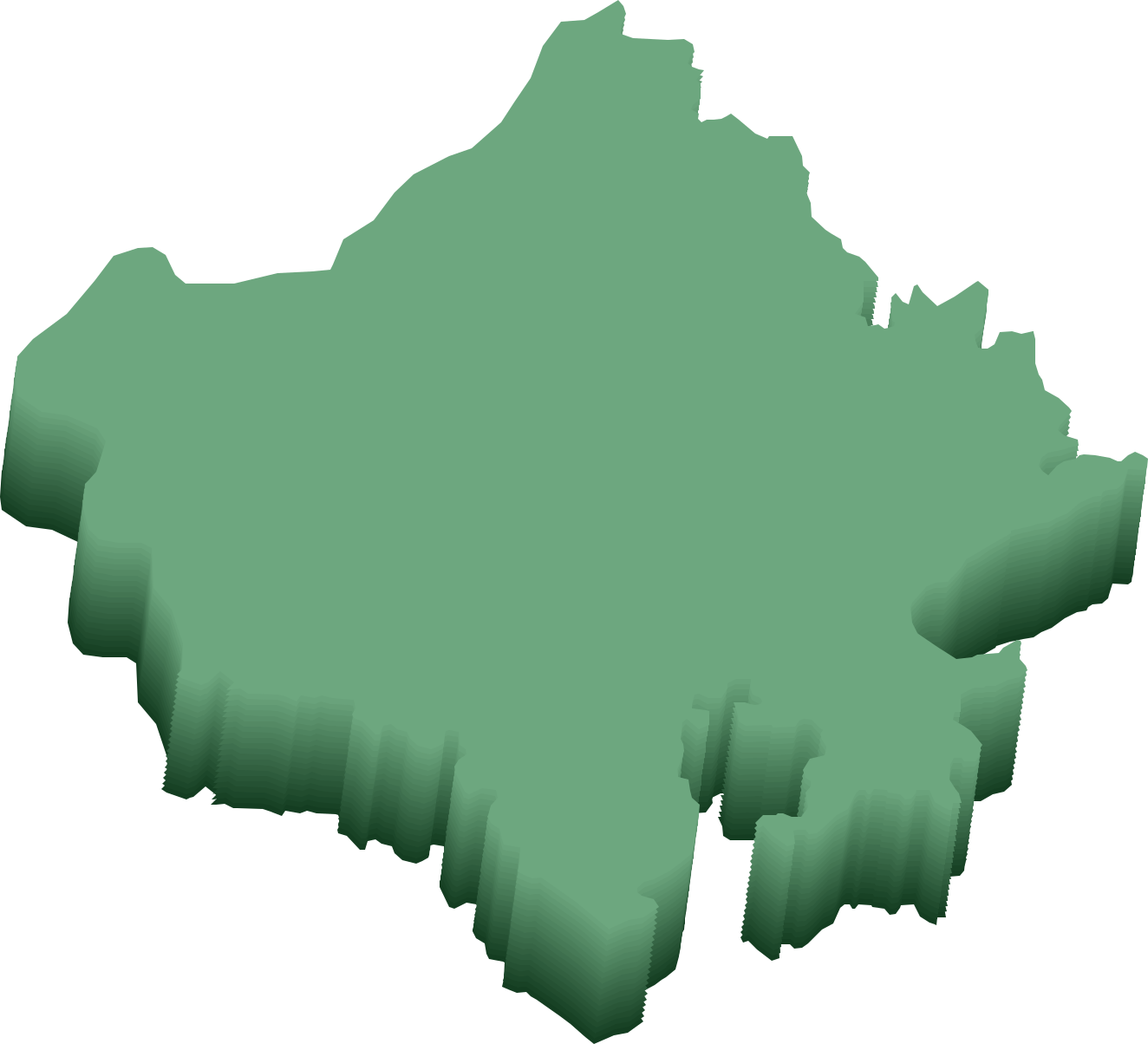
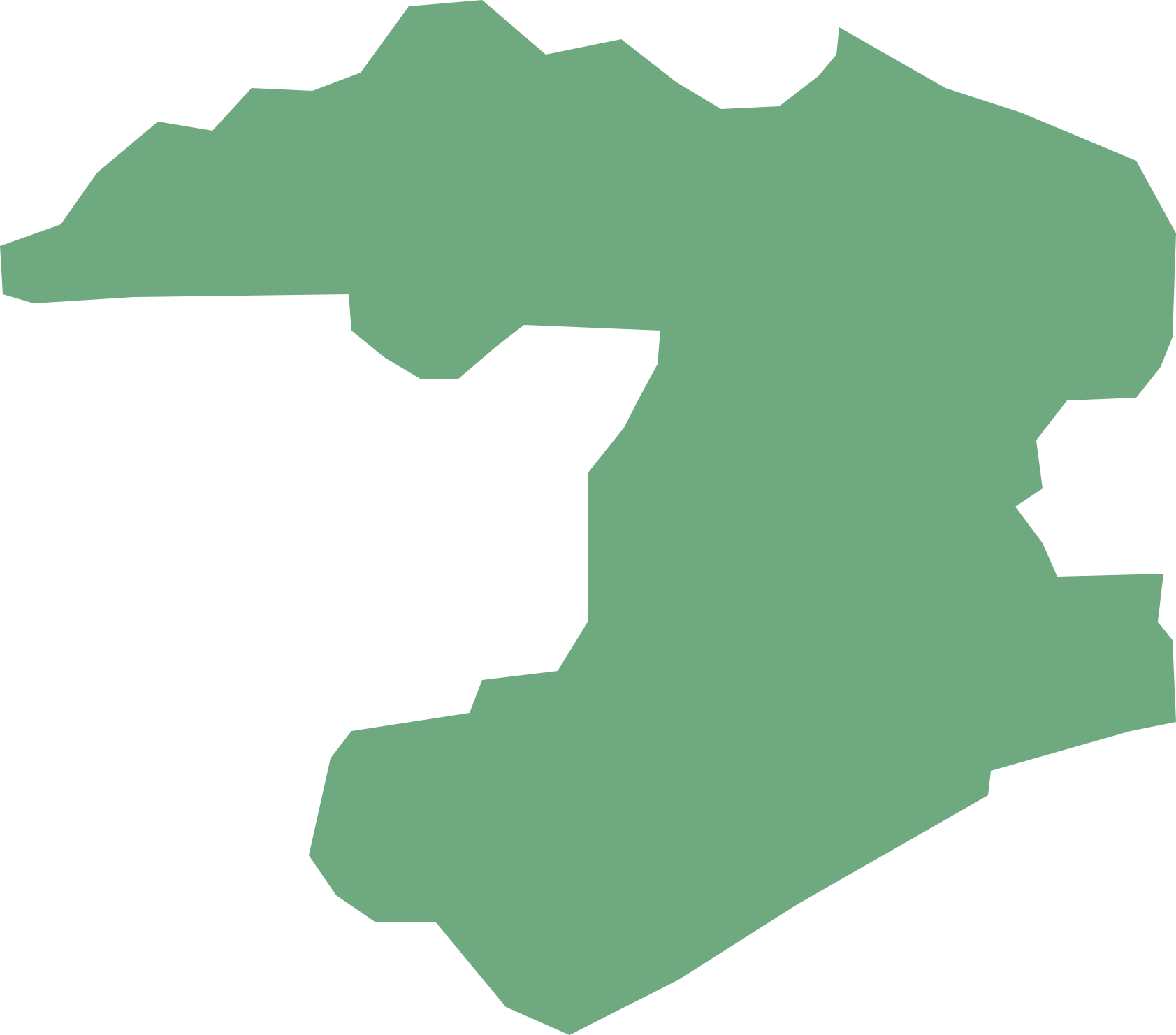
The district extends to a geographical area of 5,524 sq km. and on basis of this territorial size ranks 23rd in the state and 196th in India. of its large area, 1579.89 sq km. are demarcated as a waste land, which cannot be used for any kind of agricultural or industrial activity. It lies at 26°50'N latitude, 77°03'E longitude and 275 m altitude. In the year 2023, there was a total 15.18% forest area of total geographical area. It is bounded by the Chambal River from the south east while almost entire district is covered by hills and ravines. It is full of beauty and covered by Vindhyachal and Aravali mountains. Plains are very fertile and clay is very light weight and sandy. The region has good grade stone and some iron ore comprise of the mineral resources of the area. The major minerals found in the district are sand stone, missionary stone, silica sand soapstone, white clay. The district has sunny temperature throughout the year. It comprises the dry climate area of subtropical region. It also has distinct winter and long summer season. The district is well connected to other major cities and towns by the network of roads. The actual rainfall in the district was 1280.3 mm in the year of 2024-2025.
In the state of Rajasthan, the district of Karauli came into existence in the year 1997. Its district Headquarters is at Karauli which is located at a distance of 160 km. from the State Capital. Moreover, it has 4 towns and 888 villages. The percentage of urban and rural population was 14.96% from the urban sector and 85.04% from the rural sector with all official work being conducted in Hindi which is considered the administrative language.
According to 2011 census, the district is home to a total number of 2,62,659 households with a total population of 14,58,248 of which 7,83,639 are males 6,74,609 are females. The population growth rate during the period 2001 to 2011 was 20.55% including 20.19% were males and 20.97% were females. The density of population of the district is 264 persons per sq km. The sex ratio is 861 (females per 1000 males) while the child ratio stands at 852 (females per 1000 males). Furthermore, the district has projected population of 17,78,319 comprising 9,56,843 males and 8,21,476 females for the year 2026. According to the National Family Health Survey (NFHS-5, 2019–21), the district has an estimated sex ratio of 996 females and a child sex ratio of 858 females per 1,000 males. As per 2011 census the percentage of major religions practiced by the people of this region are Hindu and Muslim with 94.02% and 5.59% of the total population. According to 2011 census the principal language in the district is Hindi with 99.44%. In the year 2023 the number of live births in the district was 34,844 out of which 18,820 were males and 16,024 were females. In the same year the number of deaths in the district was 8,128 out of which 5,125 were males and 3,003 were females.
The main source of the income of the people in the region is agriculture. It is one of the districts in Rajasthan currently receiving funds from the Backward Region Grant Fund Program (BRGF). In the year 2023-2024 the Gross Domestic Product in the district was Rs. 21,60,477 lakh at current price and Rs. 11,36,701 lakh at constant 2011-2012 prices. The Net Domestic Product in the district during the period 2023-2024 was Rs. 19,71,755 lakh at current price and Rs. 10,19,260 lakh at constant 2011-2012 prices. The Per Capita Income or NDDP, At Factor Cost in the district during the period 2023-2024 was Rs. 1,13,676 at current price and Rs. 58,763 at constant 2011-2012 prices.
The literacy rate in the district is 66.22% out of which 81.41% are males and 48.61% are females. The total literate population of the district is 8,05,849 including 5,31,904 are males and 2,73,945 are females. The total number of illiterate persons is 6,52,399 out of which 2,51,735 are males and 4,00,664 are females. In addition, according to the Periodic Labour Force Survey (PLFS) for the period July 2023-June 2024 estimated literacy rate in the district is 74.03% including 88.27% are males and 60.70% are females (Age 7 Years and Above).
The main educational institutes in the district are District institute of Education and Training, Government Polytechnic College, Sourabh College of Engineering and Technology, Misri Devi Memorial Polytechnic, Veena Institute of Technical Education.
The important historical sites or the religious places of the district are City Palace, Ramathra Fort, Bhanwar Vilas Palace, Kaila Devi Temple, Madan Mohanji Temple, Timangarh Fort, Kalyanji Temple, Amargarh Fort, Keladevi Wildlife Sanctuary and Shri Mahavir Ji Temple. It is believed that Timangarh fort is constructed in 1100 AD and was destroyed in one of the attack thereafter. Then, it was renovated in 1244 AD by king Timanpal of Bayana. Kela devi wild life sanctuary was established in the year 1983. It was made a part of the famous Ranthambore tiger Reserve in the year 1991. The temple of Madan Mohanji belongs to Gudiya sampradaya and is the centre of faith for Hindus. It is built by king of Karuli. It is made up of Karauli stone and best example of medieval architecture. During the year 2024 there were 91,41,862 domestic tourists and 2,047 foreign tourists who visited these places of the district.